OpenAI’s $20 Billion Bet on Cerebras: The End of the GPU Monoculture?

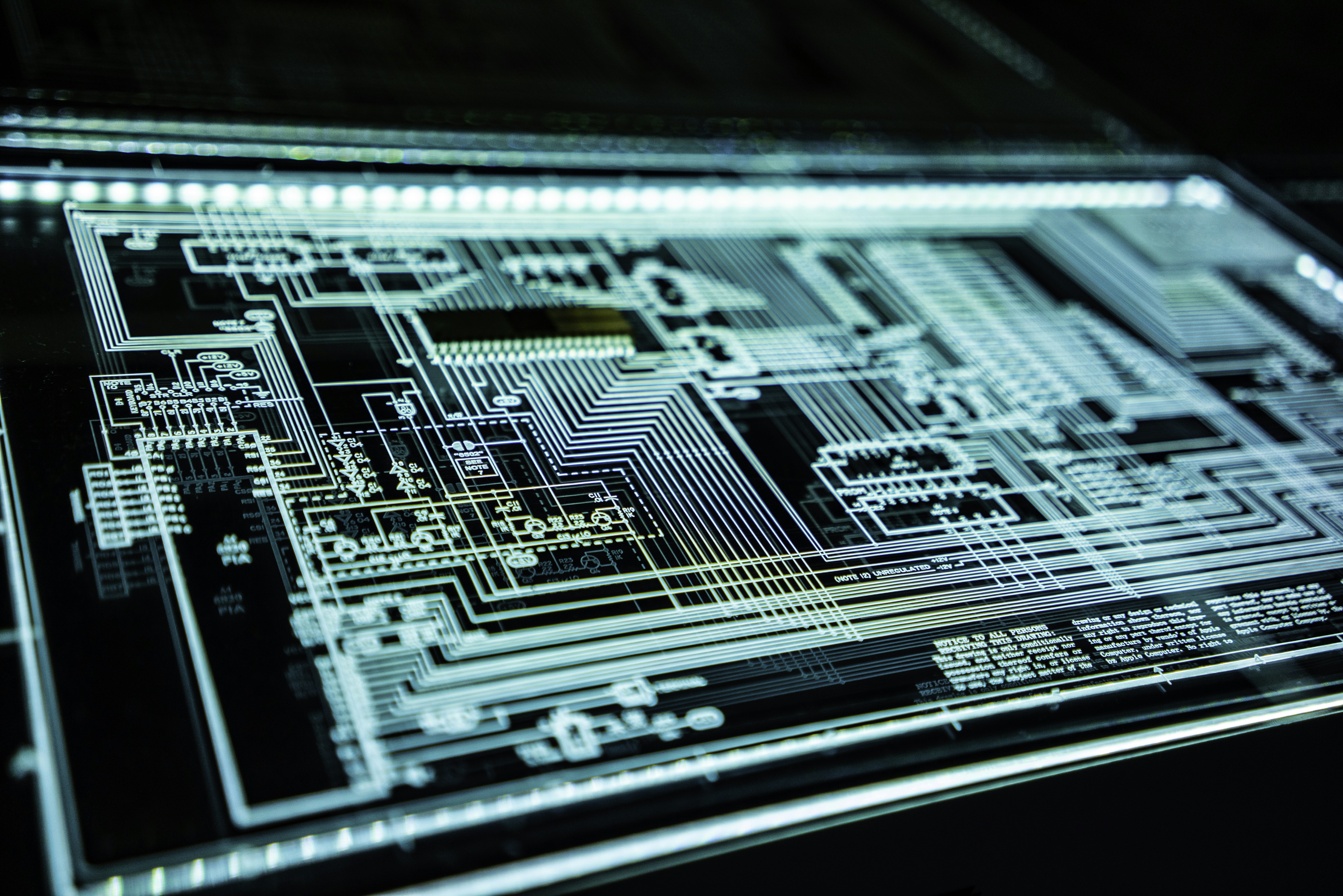
Image source: https://www.cerebras.net/product-chip/
Executive Summary
On April 17, 2026, the landscape of artificial intelligence infrastructure underwent a tectonic shift. OpenAI officially committed over $20 billion to a multi-year agreement with Cerebras Systems, the pioneer of wafer-scale AI accelerators. This deal, which doubles a previous $10 billion arrangement, represents one of the largest infrastructure investments in the history of the technology sector.
For technical and business leaders, this development signals more than just a massive capital expenditure; it marks the beginning of the end for the "GPU monoculture." By pivoting toward Cerebras’ unique wafer-scale architecture, OpenAI is attempting to bypass the physical and economic bottlenecks of traditional distributed GPU clusters to achieve the next order of magnitude in model scaling. This analysis explores the technical rationale, the business strategy of hardware diversification, and the broader implications for the global AI market.
---
The $20 Billion Infrastructure Pivot
According to reports from CXO Digital Pulse, the agreement spans three years and significantly expands OpenAI's compute footprint. Central to the deal is the acquisition of servers powered by Cerebras’ chips, which are fundamentally different from the NVIDIA H100s and B200s that have dominated the industry for years.
#### Key Terms of the Agreement:
- Total Commitment: Over $20 billion in spending on Cerebras-powered infrastructure.
- Compute Capacity: The deal builds on a January 2026 arrangement to purchase up to 750 megawatts of computing capacity, now effectively doubling the scale of that ambition.
- Equity Component: OpenAI may receive an equity stake in Cerebras through warrants tied to its spending, aligning the long-term interests of the model developer with the hardware manufacturer.
This move comes at a time when OpenAI’s compute requirements are escalating at a rate that traditional data center architectures struggle to match. By securing such a massive volume of dedicated, non-GPU compute, OpenAI is insulating itself from the supply chain volatility and premium pricing associated with the dominant semiconductor players.
---
Technical Deep Dive: Wafer-Scale vs. GPU Clusters
To understand why OpenAI would commit $20 billion to a startup like Cerebras, one must understand the technical limitations of the status quo.
#### The Networking Bottleneck In a traditional NVIDIA-based cluster, thousands of individual GPUs are linked together via high-speed networking (like InfiniBand). As models scale to trillions of parameters, the time spent moving data between chips becomes a primary bottleneck. This is known as the "communication overhead." Even with advanced interconnects, the latency involved in traversing a massive data center fabric limits the efficiency of training.
#### The Cerebras Solution: Wafer-Scale Engine (WSE) Cerebras takes the opposite approach. Instead of cutting a silicon wafer into hundreds of small chips, they use the entire wafer as a single processor.
- Zero Latency Interconnect: Because the entire "cluster" is on a single piece of silicon, communication between cores happens at the speed of on-chip wires, not network cables. This results in bandwidth that is orders of magnitude higher than traditional clusters.
- Memory Architecture: The WSE architecture allows for massive amounts of SRAM (Static Random-Access Memory) to be distributed across the wafer, providing the high-speed memory bandwidth essential for the "thinking" modes and long-context reasoning seen in 2026-era models like GPT-5 and its successors.
- Power Efficiency: By eliminating the need for complex networking hardware and reducing the distance data must travel, wafer-scale systems can theoretically deliver much higher performance per watt—a critical factor given OpenAI's 750MW+ power requirements.
---
Business Strategy: The "NVIDIA Escape"
From a business perspective, OpenAI is executing a classic diversification strategy. While NVIDIA remains a vital partner, total dependence on a single vendor for the "oxygen" of the AI industry (compute) is a massive strategic risk.
#### 1. Cost Control and Margin Expansion NVIDIA’s gross margins have historically hovered near 80% for AI chips. By partnering deeply with Cerebras and taking an equity stake, OpenAI is effectively "insourcing" its hardware innovation. This allows OpenAI to capture more of the value chain and potentially lower the inference costs for its API and consumer products.
#### 2. Architectural Tailoring As OpenAI moves toward more specialized models—such as agentic systems for engineering (Codex Max) or multimodal "world models" (Genie 3.0)—they require hardware that can be optimized for specific workloads. A deep partnership with Cerebras allows for co-designing the software-hardware stack, ensuring that the next generation of models isn't just larger, but more efficient.
#### 3. Competitive Moat By locking up a significant portion of Cerebras’ production capacity and power allocation, OpenAI creates a high barrier to entry for competitors. While Meta and Google have their own custom silicon (MTIA and TPU), other labs like Anthropic or xAI may find it increasingly difficult to secure the megawatt-scale infrastructure needed to keep pace.
---
Implementation Guidance for CTOs and IT Leaders
While most enterprises will not be signing $20 billion hardware deals, the OpenAI-Cerebras partnership offers several lessons for corporate AI strategy in 2026:
- Diversify the Compute Stack: Do not build your entire AI strategy on a single hardware architecture. As OpenAI has shown, the "best" hardware for training may not be the best for inference or for specific model architectures. Explore multi-cloud and hybrid-hardware approaches.
- Focus on Energy Efficiency: With the FBI reporting massive AI-related scam losses and governments like the UK investing in "Sovereign AI" (Source 1.6, 1.15), the regulatory focus on AI is shifting toward its environmental and social impact. Selecting energy-efficient hardware like wafer-scale systems can help meet future ESG (Environmental, Social, and Governance) requirements.
- Software Portability is Key: The biggest risk in moving away from NVIDIA is the loss of the CUDA ecosystem. Ensure your engineering teams are utilizing abstraction layers (like Triton or OpenXLA) that allow models to run across different hardware backends without complete rewrites.
---
Risks and Ethical Considerations
Despite the promise of this deal, several significant risks remain:
- The Concentration of Power: As noted by New York State Comptroller Thomas DiNapoli, there is a growing demand for transparency regarding how AI usage contributes to workforce changes (Source 1.10). A $20 billion investment in compute implies a massive acceleration in automation capabilities, which could exacerbate social friction and lead to further regulatory scrutiny.
- Energy Consumption: A 750MW commitment is equivalent to the power consumption of a mid-sized city. As Representative Yassamin Ansari recently noted in a congressional subcommittee, the intensive energy usage of AI has profound climate implications (Source 1.13). OpenAI will likely face pressure to prove that this new infrastructure is powered by carbon-neutral sources.
- Technical Execution Risk: Wafer-scale computing is notoriously difficult to manufacture and cool. Any yield issues at Cerebras or cooling failures in the massive 750MW clusters could result in significant downtime for OpenAI’s services.
---
Conclusion
OpenAI’s $20 billion commitment to Cerebras is a definitive statement that the future of AI will be built on specialized, high-efficiency infrastructure rather than general-purpose components. By doubling down on wafer-scale technology, OpenAI is betting that architectural innovation is now just as important as algorithmic innovation. For the rest of the industry, the message is clear: the race for AI supremacy is no longer just about who has the most data, but who has the most efficient way to process it.
Primary Source
CXO Digital PulsePublished: April 17, 2026